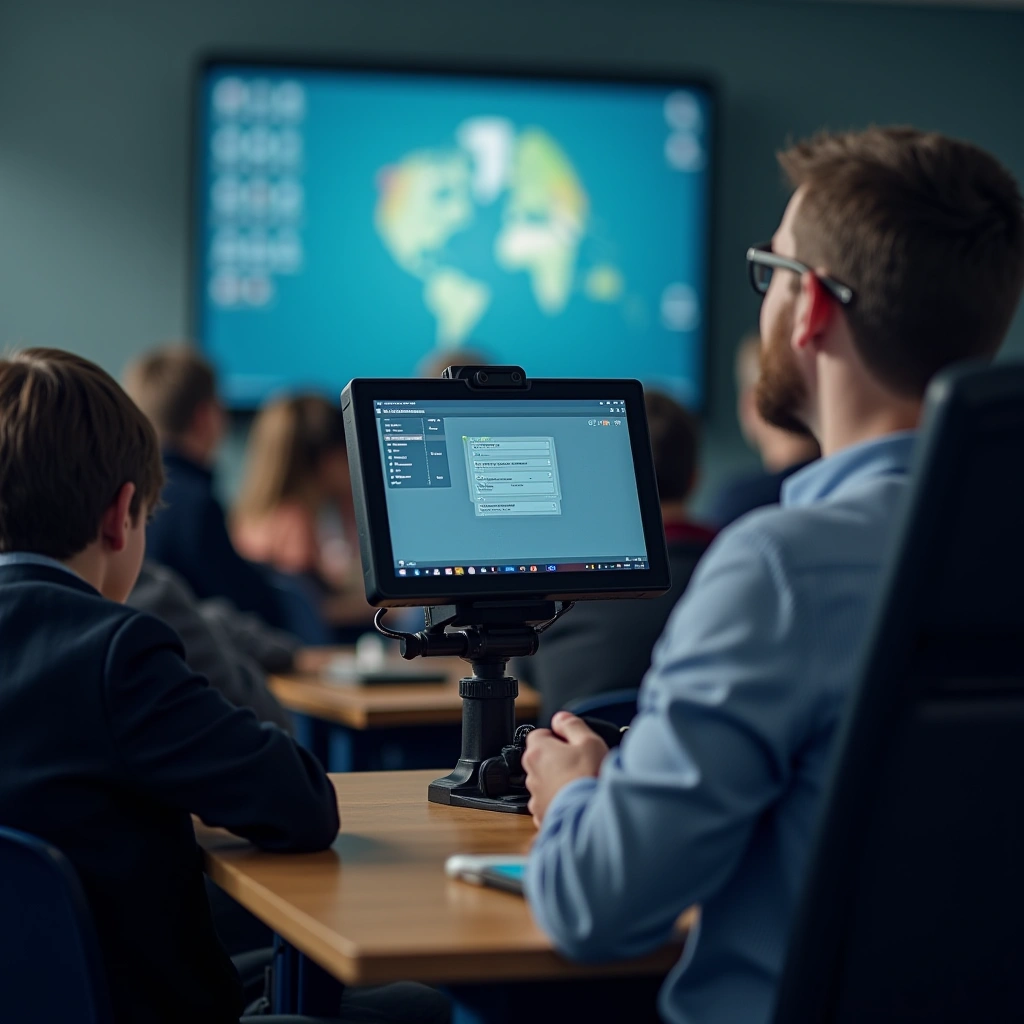
Ah, the age-old debate of education: blackboards versus screens. Remember the days when the most advanced technology in a classroom was a chalkboard and a teacher who could wield chalk like a wizard? Well, fasten your seatbelts, folks, because we’ve entered the era of screens, and they’re taking over like an army of caffeinated squirrels.
So, why are so many schools opting for digital devices over traditional teaching methods? Let’s break it down:
1. A World of Information at Their Fingertips
Imagine being a student today. You don’t need to lug around a backpack filled with textbooks that weigh more than a small car. Instead, everything you could possibly need for your studies is just a click away! Need to research the mating habits of the rare pink unicorn? Just type it into Google, and voila! You’ve got a plethora of information (and likely a few conspiracy theories) at your disposal.
2. Engagement Levels: Higher Than a Kite in a Windstorm
Let’s face it, kids today have the attention span of a goldfish on espresso. Schools are adopting screens to keep them engaged. Interactive lessons with videos, games, and quizzes are a lot more enticing than the monotone lecture about the Industrial Revolution. Plus, who wouldn’t want to learn about the War of 1812 while playing a video game that involves shooting cannons?
3. Preparing for the Real World
We live in a digital age, where technology is as ubiquitous as avocado toast in a hipster coffee shop. By integrating screens into education, schools are preparing students for a workforce that is increasingly tech-savvy. Let’s be honest, if you can’t figure out how to use Zoom by the time you graduate, you might as well be trying to communicate with smoke signals.
4. Teachers: The New Superheroes
Okay, hear me out. Teachers are already superheroes in disguise, but now they’re expected to be tech wizards too. They’ve got to juggle lesson plans, tech issues, and the occasional student who thinks it’s hilarious to mute their camera during the most serious of lectures. It’s a tough gig, but the best teachers are rising to the challenge, making learning fun and interactive.
5. The Flip Side: Are We Sacrificing Human Connection?
Now, here comes the controversial part. While screens can enhance learning, are we losing something essential? The human connection? The art of conversation? The joy of sharing a laugh with a classmate over a shared joke about math? There’s something to be said for passing notes in class (you know, the ones that say “Do you like me? Yes or no?”). A digital classroom can sometimes feel like a bunch of robots talking to each other, and that’s not exactly a recipe for emotional intelligence.
6. Screen Fatigue: The Dark Side of Digital Learning
Let’s not forget about screen fatigue. Staring at a screen for hours on end can turn even the most enthusiastic student into a zombie. Schools need to balance screen time with good old-fashioned activities. Nothing beats a good ol’ group project that doesn’t involve sending 47 emails back and forth.
In conclusion, while screens in the classroom can provide numerous benefits from accessibility to engagement, we need to tread carefully. Education is not just about information; it’s about nurturing the whole person. So, let’s keep the screens, but let’s also remember the magic of human interaction. After all, a little chaos in the classroom from time to time is what makes learning truly unforgettable. And who knows, maybe one day we’ll look back and laugh at the idea of a world without screens—while simultaneously cringing at our screen time stats.