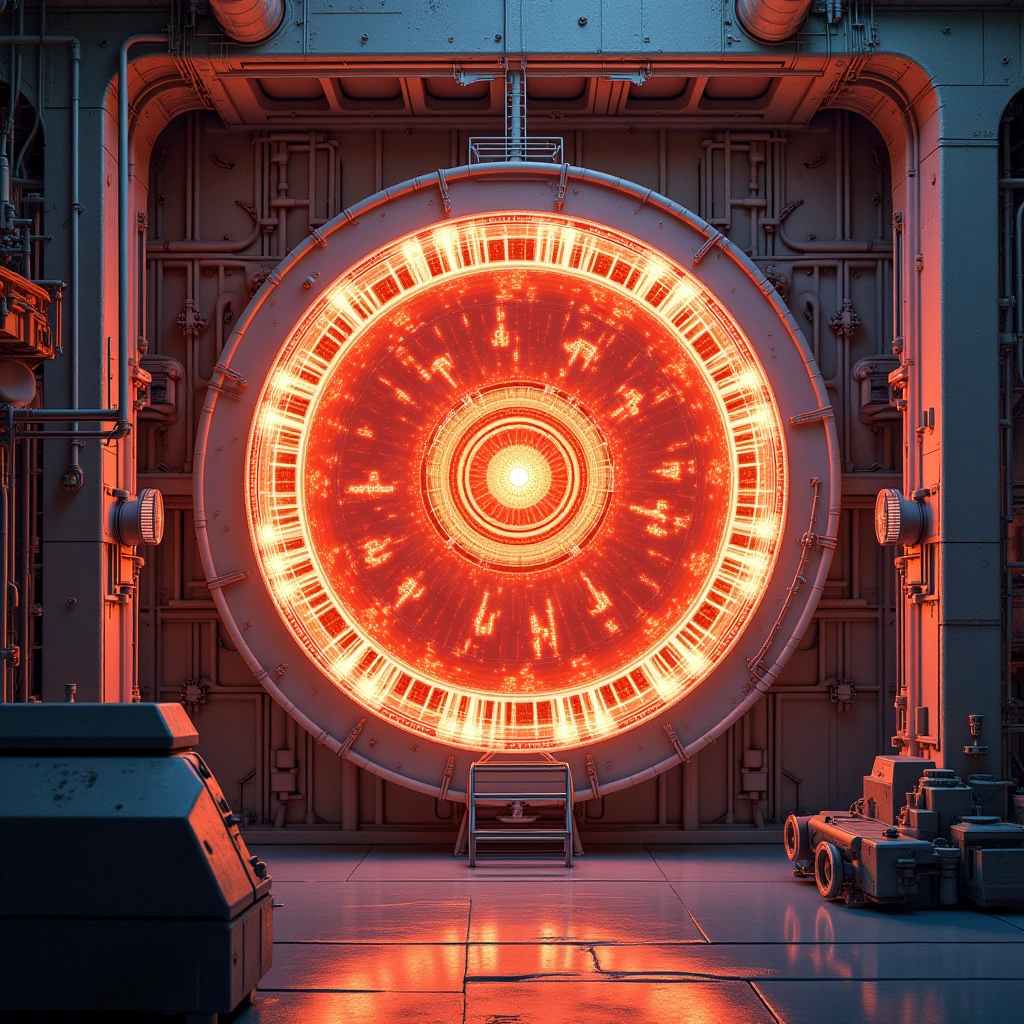
Hey there, fellow science enthusiasts! Buckle up because we’re about to dive into the fiery depths of the ST40 fusion reactor, a place where atoms are ripped apart like they owe money to the mob. Yes, you heard me right! This baby operates at temperatures hotter than the core of the Sun. If that doesn’t get you excited, I don’t know what will!
First off, let’s talk about what fusion really means. No, it’s not just the name of a trendy smoothie shop where you can get kale and overpriced protein powder blended together. Fusion is the process that powers our beloved stars, including our very own Sun. It’s when lighter atomic nuclei combine to form a heavier nucleus, releasing an astronomical amount of energy in the process. Think of it as the universe’s way of saying, “Let’s turn up the heat!”
Now, you might be wondering, why on Earth (or in this case, off Earth) would we want to recreate the scorching conditions of the Sun? Well, it’s all about clean energy, my friends! Fusion has the potential to provide a virtually limitless source of power without the pesky side effects of pollution and radioactive waste that come with nuclear fission. Imagine a world where your morning coffee is brewed using the same power that fuels the stars above. Sounds like a caffeine-fueled sci-fi dream, right?
The ST40 fusion reactor is a marvel of engineering and science, designed to harness this stellar process. Inside, things get a bit wild. At temperatures soaring above 150 million degrees Celsius, hydrogen isotopes are smashed together, creating plasma—a state of matter where electrons are stripped from atoms. It’s like a cosmic party where the atoms just can’t handle the heat and decide to break up!
But let’s face it, all this techno-babble can sound a bit intimidating. So, here’s the deal: the ST40 is essentially trying to replicate what happens in the Sun, but on a much smaller scale. Scientists hope that by mastering fusion, we can solve the energy crisis and finally stop burning fossil fuels like they’re going out of style. Because, spoiler alert: they are!
Of course, we have to address the elephant in the room: the challenges of fusion energy. Achieving and maintaining those ridiculously high temperatures is no walk in the park. It’s more like a marathon in a sauna while juggling flaming torches. Engineers and scientists are working tirelessly to overcome these hurdles with advanced technologies like magnetic confinement and inertial confinement. They’re basically the superheroes of the energy world, fighting against the odds to save us from the dark ages of energy consumption.
So, what does the future hold for fusion reactors like the ST40? If all goes well, we might just be looking at a future where energy is clean, abundant, and as easy to access as your favorite streaming service. Imagine charging your electric car using fusion energy while binge-watching your latest obsession—now that’s the dream!
In conclusion, the ST40 fusion reactor is not just a fancy science project; it’s a beacon of hope for our planet’s energy future. So, the next time someone mentions fusion, you can smile knowingly, nod, and maybe even drop a few science puns. Because when it comes to saving the world, we could all use a little humor and a whole lot of plasma!