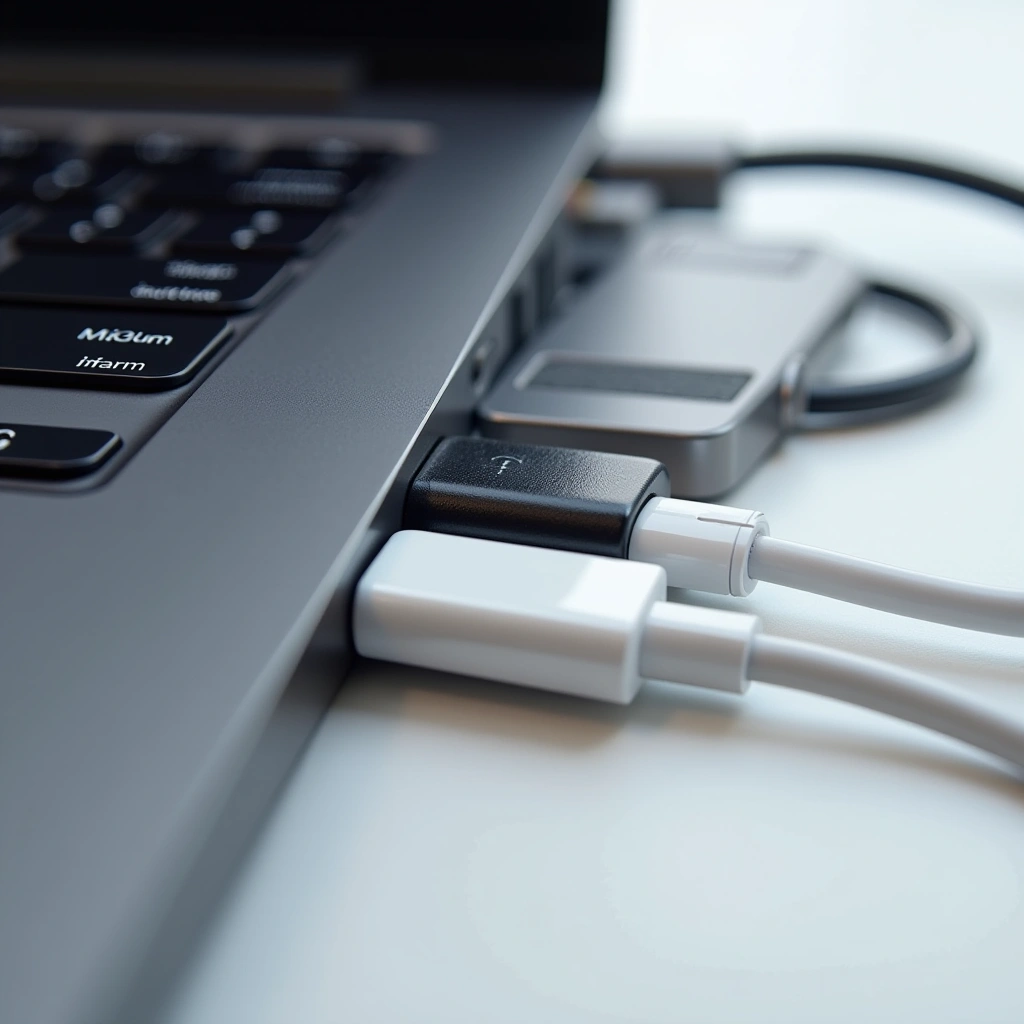
Hey there, tech aficionados and casual laptop users alike! Grab your favorite beverage because we’re diving into a hot topic that’s heating up the tech scene: the EU’s new mandate requiring USB-C charging for new laptops up to 100 watts. Yes, you heard that right! It’s like the EU just walked into a room full of charging cables and said, ‘Enough is enough!’
Now, let’s break this down. For those of you who’ve been living under a rock or maybe just too deep into your gaming sessions, the European Union has decided to standardize charging ports. Why? Because they want to save us from the endless jungle of different chargers and the frustration of trying to find the one that fits your device. Picture this: you’re in a café, and your laptop is about to die. You rummage through your bag, only to find a charger for a toaster. Not cool.
So, what does this mean for us? First off, it’s a step towards reducing e-waste. You know, all those chargers that end up in landfills because they only work with that one model of smartphone you bought in 2015. By moving to a USB-C standard, the EU is basically saying, ‘Let’s cut the cord – or rather, the variety of cords – and make life easier for everyone.’
But wait, there’s more! This isn’t just about convenience; it’s also about power. The new regulation applies to laptops that draw up to 100 watts. So, if you’re one of those power-hungry gamers or content creators, rejoice! You’ll be able to use the same charger for your laptop as you do for your phone. Just think of the possibilities! You could be in a coffee shop, and instead of looking like a tech hoarder with a bag full of cables, you’ll just have one sleek USB-C charger. Classy.
Now, some might argue that this is a classic case of government overreach. ‘Why should the EU dictate what type of charger I should use for my tech?’ they say. But let’s be real here, folks: we already live in a world where regulations exist to protect us from ourselves, like wearing seatbelts or not allowing us to drink the water from the garden hose. The truth is, too much choice can lead to decision paralysis. Sometimes, we just need a nudge in the right direction.
Of course, there are critics who fear this could stifle innovation. Imagine a world where your laptop could charge itself via solar power or even harness the energy from your cat’s purring. Okay, maybe that’s a stretch, but you get the idea. However, standardizing charging methods doesn’t mean we’re putting a cap on innovation. It just means we’re simplifying the process. After all, if your laptop can be charged with the same cable as your phone, who’s to say we can’t have even cooler charging technologies in the future?
In conclusion, the EU’s decision to mandate USB-C charging for new laptops is a move towards a more streamlined and environmentally friendly tech landscape. Sure, it might ruffle some feathers in the tech industry, but let’s face it – less clutter, less waste, and fewer chargers to lose is something we can all get behind. So, the next time you’re at a coffee shop, and you see someone struggling with a tangled mess of charging cables, you can just smile and nod, knowing that you’re part of a future where USB-C is king.
Now, if only they could solve the mystery of why chargers always disappear into thin air… Cheers to that!