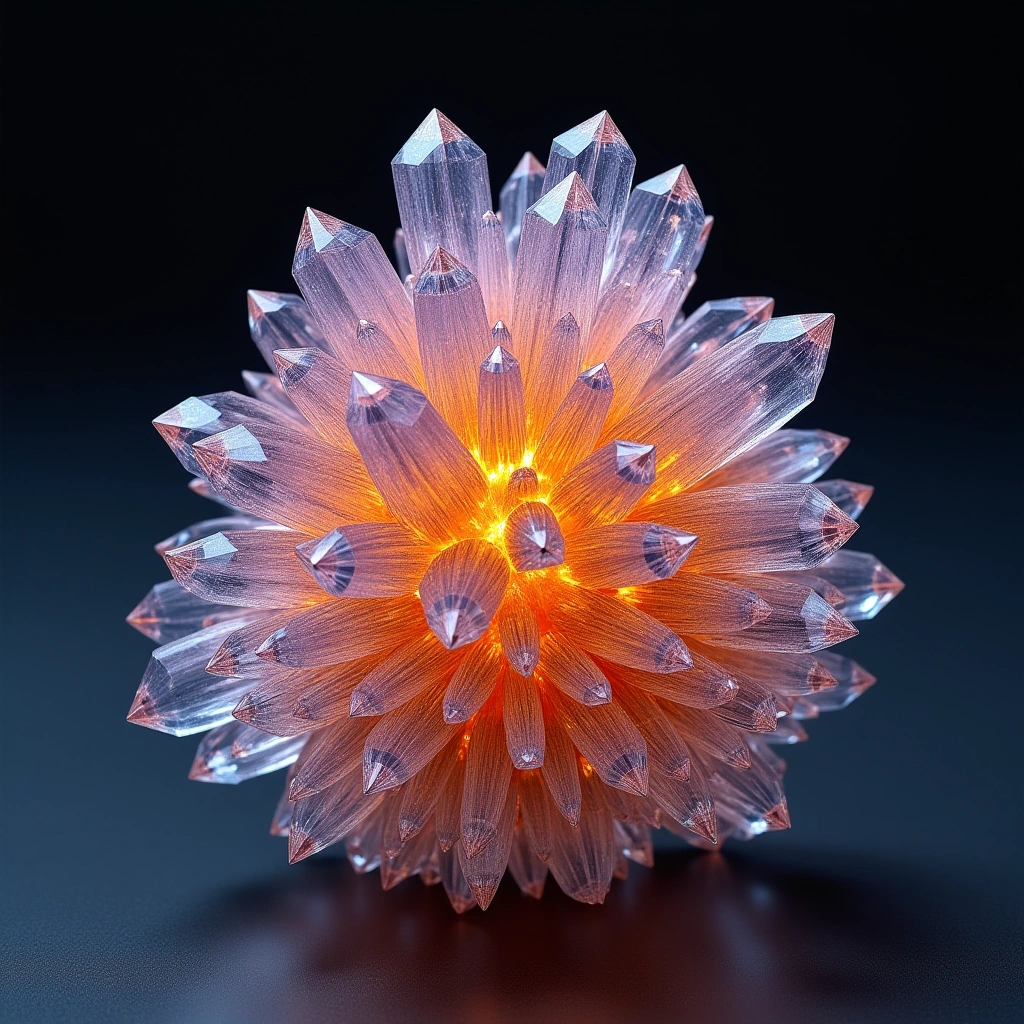
Hey there, crystal enthusiasts! Have you ever seen a bismuth crystal and thought, “Wow, that looks like a futuristic cityscape made of metal!”? Well, you’re not alone! These stunning little geometric wonders are not just pretty to look at; they have a fascinating growth process that makes them a hot topic in the world of science and aesthetics alike.
So, let’s dive into the science behind these mesmerizing shapes! Bismuth, a heavy metal that’s often overshadowed by its more famous cousins like gold and silver, has a unique way of forming crystals. Unlike the rest of us who grow at a steady pace (usually around the waistline, am I right?), bismuth crystals have their own growth strategy. The edges of these crystals grow faster than their interiors, leading to those distinctive, stair-step patterns that make them look like they were designed by an architect with a flair for the dramatic.
But why do their edges grow faster? Well, this nifty little trick is due to the atomic structure of bismuth. When bismuth is cooled from a molten state, the atoms arrange themselves in a way that favors edge growth. It’s like those overly ambitious neighbors who can’t stop adding more stories to their houses. The interior, on the other hand, takes its sweet time, resulting in the beautiful, layered look that makes these crystals so desirable.
Now, let’s talk about the colors! Bismuth crystals often display a riot of colors thanks to the oxide layer that forms on their surface. Think of it as nature’s way of throwing a rave! The iridescent hues of blue, green, and gold are not just for show; they’re a byproduct of light interference, much like how oil creates those pretty colors on a puddle. Who knew chemistry could be so fabulous?
But wait, there’s more! Bismuth crystals are not just eye candy; they’re also part of a bigger conversation about the importance of sustainable materials. As a non-toxic element, bismuth is often used as a lead replacement in various applications, including pharmaceuticals and cosmetics. So, while you’re admiring your bismuth crystal, you can also feel good about supporting a greener planet. Talk about multitasking!
However, let’s not kid ourselves. The world of bismuth crystals isn’t all rainbows and sunshine. There are some who argue that the crystal-growing process can be a bit controversial. Some enthusiasts believe that the beauty of bismuth is marred by synthetic methods that can alter its natural growth. It’s like putting a filter on a sunset; sure, it looks nice, but it’s not the real deal. So, if you’re looking to get into the bismuth game, consider sticking to natural methods – your crystals will thank you!
In conclusion, bismuth crystals are not just a feast for the eyes; they’re a testament to the wonders of nature’s design. With their unique growth patterns, vibrant colors, and sustainable applications, they truly are a marvel of the mineral kingdom. So, the next time you see one of these beauties, remember: it’s not just a crystal; it’s a little slice of science and art rolled into one. And who doesn’t love that?