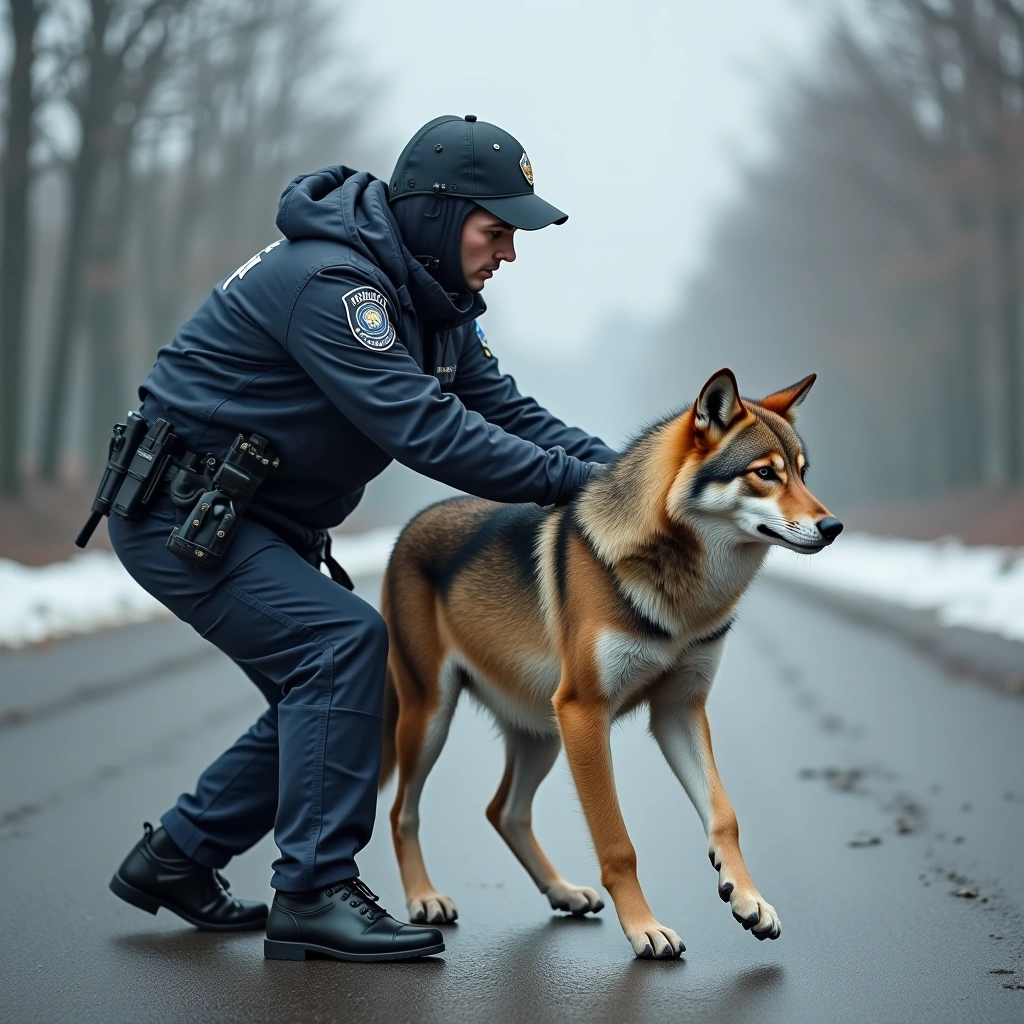
Imagine scrolling through your favorite social media platform and stumbling upon an AI-generated image of a wolf running wild in the streets of South Korea. You chuckle to yourself, thinking it’s just another bizarre creation from the ever-creative minds of the internet. But hold onto your hats, folks, because that innocent chuckle could land you in hot water with the law!
That’s right! In a plot twist that sounds more like a screenplay than reality, South Korean police recently arrested a man for creating a digital image of a runaway wolf. You heard me right—a wolf! In a world where we can barely get our pets to behave, someone thought it would be a great idea to let a wolf roam free, and now he’s facing the consequences.
Now, before you start pondering the merits of AI-generated art versus traditional art (and believe me, we have enough of those debates at family gatherings), let’s get to the crux of the matter. This arrest raises a slew of questions about the intersection of technology, creativity, and the law. Is it illegal to create AI images that depict chaotic or dangerous scenarios? Is the man an artist or a criminal? Or maybe just someone who really needs to check their creative outlets?
The police say that the image caused panic among local residents, who were understandably concerned about the potential of a real-life wolf running around. I mean, can you blame them? If I saw a wolf casually strolling down my street, I’d be less inclined to grab my camera for a selfie and more likely to hide under my bed with a tub of ice cream! But, let’s be honest, we live in a world where misinformation spreads faster than a viral dance challenge, so is it fair to hold one creative soul accountable for a bit of harmless fun?
On one hand, you could argue that art should push boundaries. We’ve seen it all before—people have created art that’s ruffled feathers, raised eyebrows, and even shook the foundations of society. On the other hand, using AI to create images that could potentially incite fear? That’s a slippery slope. Are we ready to hold AI artists responsible for the fallout of their creations? And if so, where do we draw the line?
This incident also shines a spotlight on the larger issue of the implications of AI in our daily lives. As technology becomes more advanced, we’re faced with new ethical dilemmas. Do we regulate creativity? What’s next, arresting someone for writing a scary story? “Sorry, ma’am, but your horror novel about a chainsaw-wielding maniac is considered a public safety threat!”
In conclusion, while the arrest might seem a bit over the top, it’s a reminder of the delicate balance between creativity and responsibility in our tech-savvy world. So, the next time you’re tempted to create a jaw-dropping AI image, maybe think twice about what kind of pandemonium it might unleash. Because let’s face it, we’ve got enough real-world problems without adding runaway wolves into the mix!