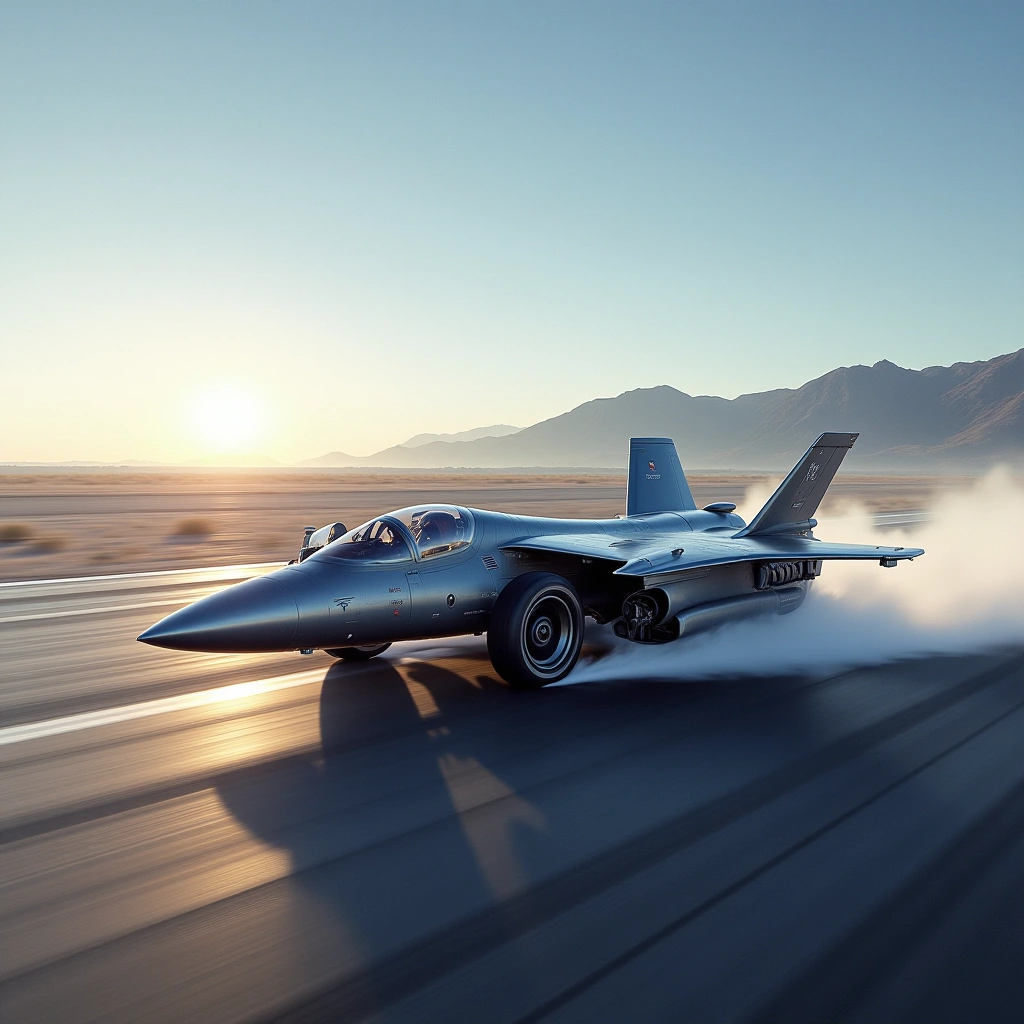
Hey there, speed demons and aviation enthusiasts! Buckle up, because today we’re diving into the thrilling world of fighter jets and their audacious dance with the sound barrier. You might be wondering, what’s the big deal about breaking the sound barrier? Well, let me set the stage for you.
First off, let’s get one thing straight: the sound barrier is not some mystical wall that separates the realm of the slow from the fast. No, it’s a metaphorical wall that represents the transition from subsonic to supersonic speeds—basically, when an aircraft decides that cruising at the speed of sound just isn’t fast enough. And trust me, that’s a bold statement coming from an object that’s already moving faster than most of us on our morning commute!
Now, the speed of sound at sea level is approximately 1,125 feet per second (or about 767 miles per hour, depending on your local weather conditions). Fighter jets, being the magnificent beasts they are, can soar well above this threshold with a flick of their afterburners. It’s like your dad’s old car revving up for a drag race, but instead of a rusty old Chevy, we’re talking about sleek, aerodynamic machines designed for agility and speed.
But here’s where it gets spicy. When a jet approaches the speed of sound, it creates a shock wave—think of it as the jet’s own personal cheer squad that gets louder and louder until bam, it breaks through the barrier. This is where the magic happens. The sound barrier is not just a physical phenomenon; it has psychological implications too. I mean, who wouldn’t want to have the bragging rights of being able to say, ‘Oh, you know, I just broke the sound barrier during my lunch break’? Talk about a conversation starter!
Now, let’s talk about some iconic jets that have made history by breaking this barrier. The legendary Concorde was one of the first commercial jets to do so, allowing passengers to sip champagne at 60,000 feet while zooming across the Atlantic faster than a speeding bullet—well, a speeding jet, but you get the point.
Then we have the fighter jets, such as the F-22 Raptor and the legendary F-14 Tomcat. These beauties aren’t just built for speed; they come equipped with cutting-edge technology that would make even Tony Stark jealous. The F-22 can reach speeds of around 1,500 miles per hour, which is like running a marathon in under an hour—if your marathon route was a straight line and completely devoid of pesky little things like gravity and the laws of physics.
But let’s not sugarcoat it: breaking the sound barrier isn’t all rainbows and unicorns. It comes with a cacophony of sonic booms that can rattle windows and annoy pet cats for miles around. So, while the pilots are soaring through the skies feeling like kings, the folks below are left wondering if a meteor just crashed in their backyard. Sorry, neighbors!
In conclusion, breaking the sound barrier is not just about speed; it’s about pushing the limits of what we thought was possible. So the next time you hear a jet zooming overhead, just remember that it’s probably not just showing off; it’s having a midlife crisis while trying to prove that it can still hang with the cool kids. And hey, if you ever get the chance to take a ride in one of these jets, just remember to hold onto your lunch—because once you break the sound barrier, things are about to get a little bumpy!
So, let’s raise a toast to those brave pilots and their magnificent machines, and may they continue to break barriers, both in the skies and our imaginations!