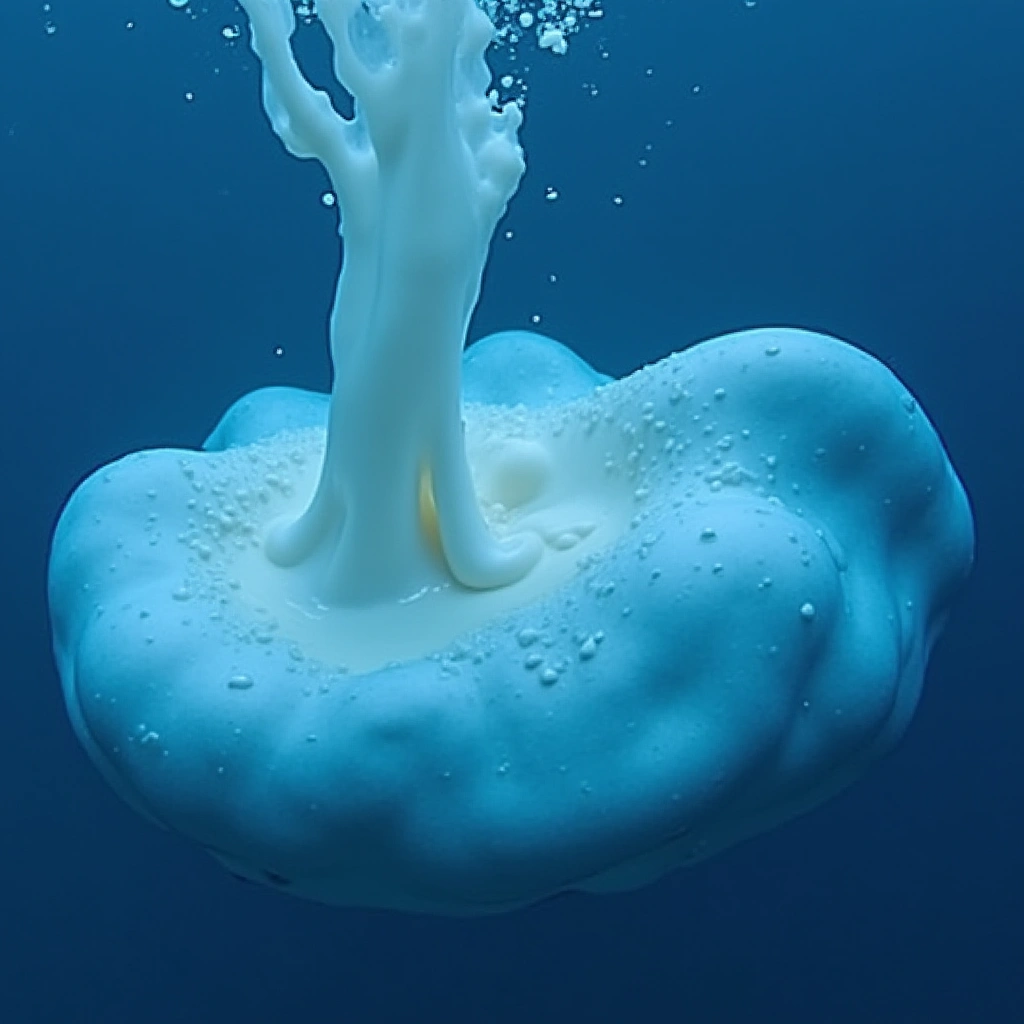
So, you’ve heard that blue whale milk is as thick and rich as flowing cream? Well, grab your snorkel, because we’re diving deep into the ocean of this fascinating topic! Let’s face it, when it comes to the blue whale, we often think about their size, their songs, and maybe even their penchant for swimming long distances. But let’s not forget about one of the most important aspects of their existence: that creamy, dreamy milk!
First off, let’s address the elephant in the ocean—or should I say the whale in the ocean? Blue whales are the largest animals on Earth, and with that size comes a need for a substantial milk supply. A blue whale mother produces a staggering amount of milk, which can be as thick as 50% fat! Yes, you heard that right. If you think your morning coffee needs cream, just think about what a baby blue whale needs to grow from a tiny calf to a 100-foot-long behemoth.
Now, if you’re wondering how this milk compares to the milk you find in your fridge, let me just say: it’s like comparing a luxury yacht to a dinghy. Blue whale milk has a consistency that resembles a rich, velvety cream, perfect for a baby whale that needs to gain weight quickly. Did you know that a calf can gain up to 200 pounds a day? Now that’s some serious growth spurt!
But before you start dreaming of a new dairy product—blue whale cream cheese, anyone?—let’s remember that this milk is specifically tailored for baby whales. It’s not like you can just waltz into the ocean and ask for a glass of blue whale milk at your local marine café. Not only is it illegal (seriously, don’t try it), but it’s also a delicacy that’s strictly for the little ones. Besides, I doubt your barista could whip up a latte with that stuff. Yikes!
Interestingly enough, the thickness of blue whale milk serves a purpose beyond just satisfying a baby whale’s appetite. The high-fat content helps to insulate the calf against the cold waters of the ocean, which is crucial for survival. It’s like nature’s version of a cozy blanket—if that blanket happened to be made of deliciously thick cream!
And let’s not forget about the bonding experience. Mother blue whales nurse their calves for around six to seven months, which is a pretty significant commitment. During this time, the calf learns essential survival skills while enjoying the richest milk in the ocean. Talk about a mother’s love!
So, the next time you’re sipping on your morning coffee or enjoying a creamy dessert, just remember that somewhere in the vast ocean, a baby blue whale is guzzling down some of the richest milk known to mankind. It may not be available for us land dwellers, but we can certainly appreciate the unique wonders of the aquatic world. Who knew that diving into marine biology could be so creamy and dreamy?
In conclusion, blue whale milk may not be the next big thing in gourmet food, but it sure is an extraordinary aspect of these magnificent creatures. So let’s raise a glass (of cow’s milk, of course) to the blue whale and their thick, rich, and creamy liquid gold!