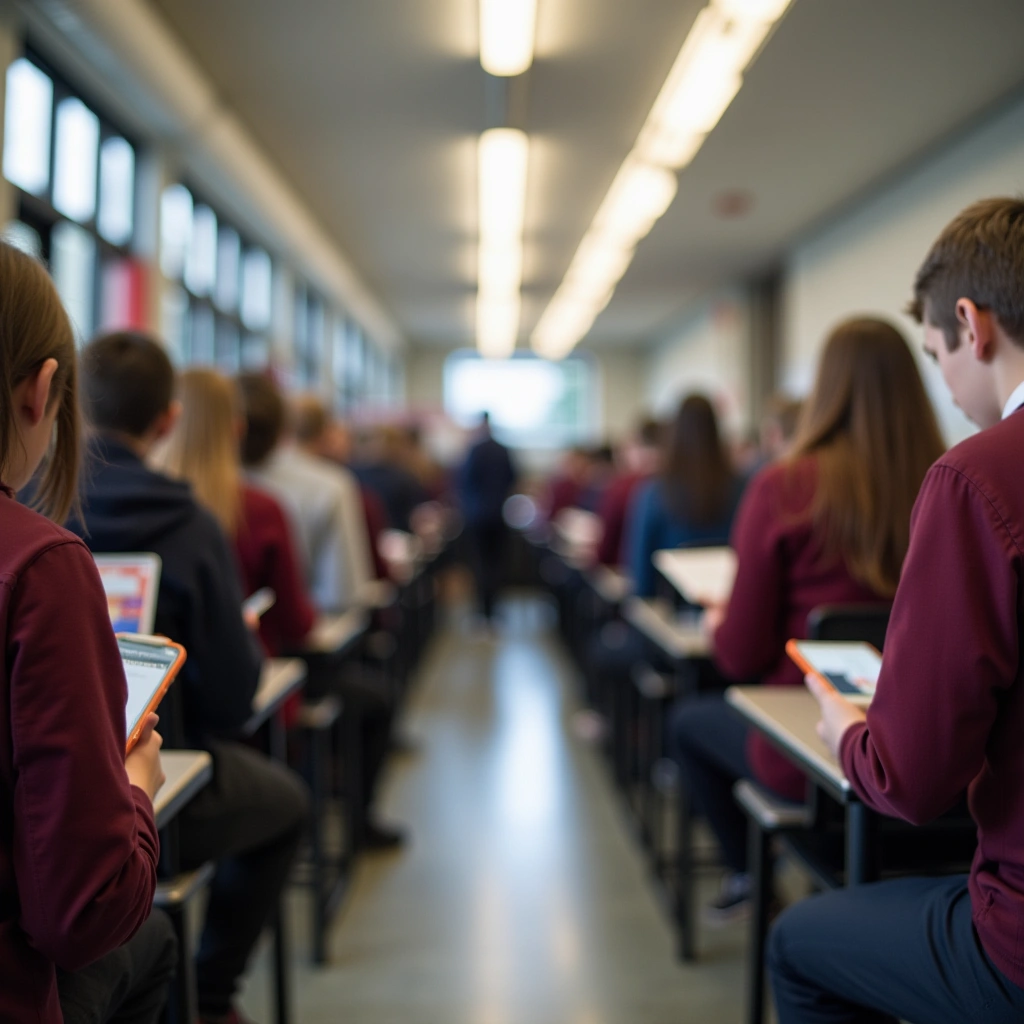
Ah, the age-old debate of whether teenagers should be glued to their screens or actually engage with the world around them. It’s almost like asking whether pineapple belongs on pizza—everyone has an opinion, and somehow, it feels like a matter of national importance.
Recently, the conversation around schools in England potentially banning mobile phones has been heating up faster than a teenager’s temper when they’re told to put their phone down. So, let’s dive into this topic, shall we?
First off, let’s address the elephant in the classroom—the distractions. We all know that phones can be more distracting than a cat video on a Sunday afternoon. Teachers are competing for attention against TikTok, Snapchat, and a plethora of other apps that promise to make your day infinitely more entertaining than quadratic equations. Is it any wonder that students might prefer scrolling through memes rather than paying attention to Mrs. Thompson’s riveting lecture on the War of 1812?
Now, some argue that banning phones could lead to a renaissance of in-person interaction. Imagine a world where students actually talk to each other face-to-face instead of through a screen. It could be like the ’90s all over again! But let’s be real, are we ready for that? We might have to dust off our social skills, and who knows what could happen if we had to actually communicate without emojis? Panic!
On the flip side, technology is a huge part of our lives, and banning phones outright might be like throwing the baby out with the bathwater. Students use their devices for research and learning. Why not teach them how to use it responsibly instead of pulling the plug entirely? It’s like saying, “Hey, you can’t have cake because you might get frosting on your face.” Instead, let’s teach them how to handle the cake without making a mess!
Then there’s the argument about equity. What if a student relies on their phone for educational apps or to communicate with parents? Banning phones could create an uneven playing field. Imagine being the kid whose only means of homework submission is through a device that’s been confiscated because they checked Instagram mid-lecture. Not cool, schools. Not cool.
And let’s not forget about the parents! They have a vested interest in this debate, too. After all, how else will they keep tabs on their kids if they can’t ping them every five seconds? A world without phones means parents would actually have to trust their kids to, you know, be responsible. The horror!
So, what’s the solution? Perhaps schools could implement a compromise—like designated phone-free zones or specific times when phones can be used. Think of it like adulting 101, where students learn to balance responsibility with the fun of scrolling through their social media feeds. It’s all about finding that sweet spot between ‘no phones ever’ and ‘do whatever you want.’
In conclusion, the debate about banning phones in schools is fraught with complexities. While the idea of a distraction-free classroom sounds fantastic, we need to consider the broader implications. So, should schools in England ban mobile phones? Maybe. Maybe not. It’s a sticky situation, much like that cake we were talking about earlier. Let’s just hope they don’t ban cake, too.