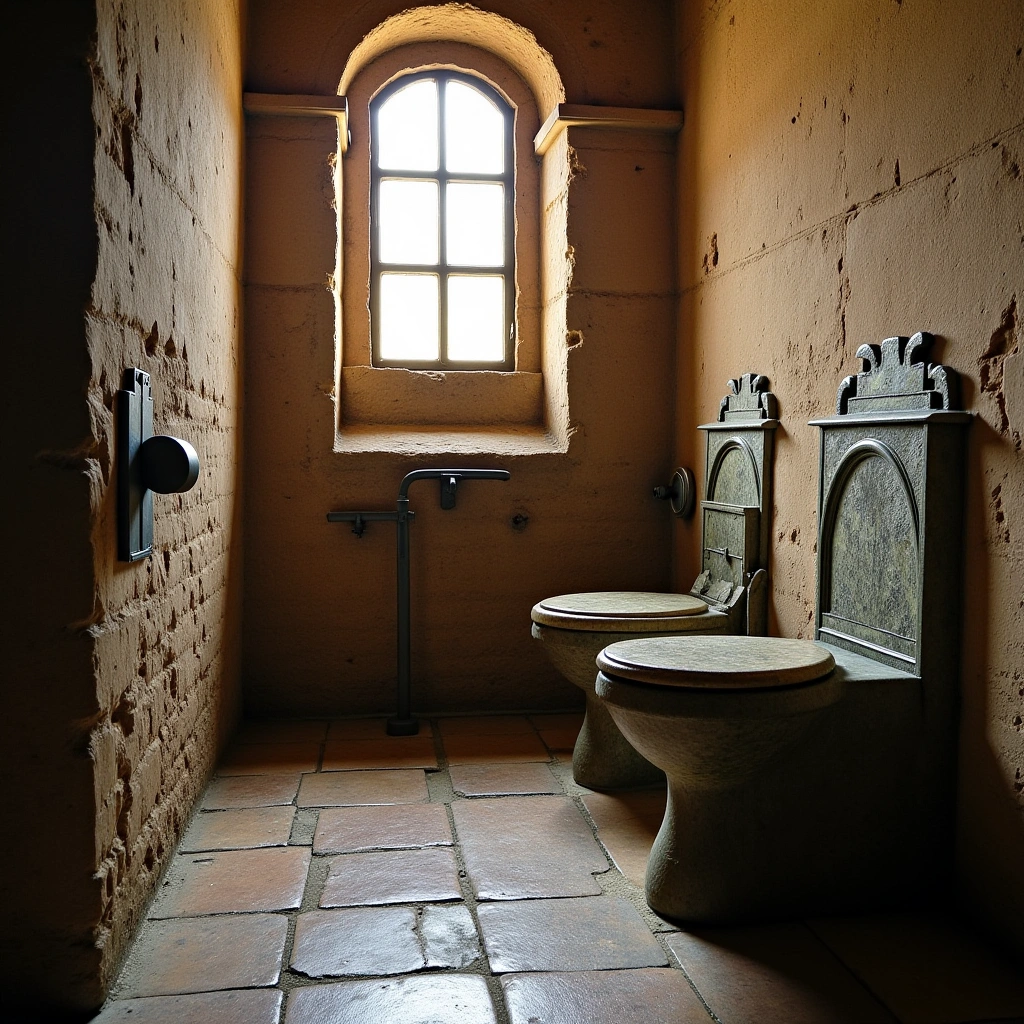
Ah, medieval castles! Those magnificent fortresses of stone, where knights roamed, dragons were slayed (or at least imagined), and the plumbing was… well, let’s just say it wasn’t exactly up to today’s standards. So, grab your goblet of mead and let’s dive into the fascinating world of medieval castle toilets—where even the royals had to answer nature’s call!
First off, let’s set the stage. Imagine you’re a lord or lady in a grand castle, surrounded by tapestries, weapons, and an exciting array of small animals that may or may not be dinner. But what about when you feel that familiar rumble in your tummy after a feast of roasted boar? That’s right! The castle toilet awaits.
Now, before you roll your eyes at the thought of a throne made of gold, let me enlighten you: the actual toilet situation in most medieval castles resembled a scene from a slapstick comedy. Most castles had a ‘garderobe’—a fancy term for a little room where you could relieve yourself. Picture a small chamber with a hole in the floor leading to a chute that would drop your business into the moat or onto the ground below. Talk about a real “royal flush!”
But wait, it gets better! The garderobes were often located on the castle’s outer walls, so they had the delightful side effect of providing a lovely breeze as you did your business. Nothing says “noble” quite like taking a dump while enjoying the view of your kingdom—unless, of course, you’re the poor peasant who just got splattered with your lord’s leftovers from above. Oops!
For those who were feeling a bit more fancy (or had a few extra coins to spare), some castles boasted stone toilets that were more like benches with a hole. These were a step up from the common garderobe, but they still lacked any kind of privacy. I mean, can you imagine sitting there, trying to hold a conversation with your neighbor while both of you are… occupied? Talk about an awkward situation!
Interestingly enough, medieval castle toilets served a dual purpose. Besides serving as a personal dumping ground, they also acted as a means of sanitation (or lack thereof). The waste would eventually decompose, providing fertilizer for the fields. So next time you’re enjoying a lovely salad, just remember it could have been nourished by a medieval lord’s lunch!
And let’s not forget about the toilet paper—or the complete absence of it! Instead of the soft, fluffy rolls we enjoy today, medieval folk often used rags, moss, or even corn cobs. I’ll let you absorb that for a moment. Can you imagine the discussions around the dinner table? “Pass the corn, dear, I need to freshen up!”
In conclusion, while we might romanticize the idea of living in a medieval castle, it’s essential to acknowledge that even the mightiest lords had to deal with some pretty gross realities. So next time you flush your modern toilet, take a moment to appreciate the engineering marvel that keeps your life a bit more civilized. Because let’s face it, no one wants to be a medieval lord with a moat full of “leftovers.” Cheers to plumbing!